
Why Laos Travel Should Be on Your Bucket List
Why Laos Travel Should Be on Your Bucket List
Laos travel deserves a coveted spot on your bucket list because this Southeast Asian gem offers a rare combination of pristine natural landscapes, deeply spiritual culture, and authentic experiences that have become increasingly difficult to find in our hyper-connected world. While frequent travelers often rush to Thailand's beaches or Vietnam's bustling cities, Laos quietly beckons with turquoise waterfalls, mist-shrouded mountains, and a pace of life that reminds us what travel is truly about.
As someone who's crisscrossed the globe countless times, I can confidently say that Laos holds a special magnetism that few destinations possess. It's the kind of place that doesn't shout for attention but whispers an invitation to slow down, breathe deeply, and reconnect with what matters.
Breathtaking and Largely Untouched Natural Landscapes

The natural beauty of Laos remains remarkably pristine compared to its more developed neighbors. The mighty Mekong River serves as the country's lifeline, winding through dramatic gorges and fertile plains. Taking a slow boat journey along the Mekong isn't just transportation—it's a meditation on travel itself, where the journey becomes as meaningful as the destination.
Just outside Luang Prabang, Kuang Si Falls cascades in turquoise perfection through multiple tiers of limestone pools. The water's otherworldly blue-green color comes from mineral deposits, creating swimming holes that feel like nature's own infinity pools. Unlike the crowded tourist waterfalls you'll encounter elsewhere when backpacking in Asia, Kuang Si maintains an almost sacred tranquility, especially if you arrive early morning.
Vang Vieng presents a completely different landscape—towering karst mountains pierce the sky like ancient sentinels, while the Nam Song River cuts through valleys dotted with caves and hidden lagoons. The dramatic limestone scenery rivals anything you'll find in China's Guilin or Vietnam's Halong Bay, but with a fraction of the crowds.
The Tranquil Magic of Si Phan Don

Down in southern Laos, Si Phan Don—the "4,000 Islands"—offers a riverine paradise where time seems to stand still. This unique archipelago in the Mekong creates a labyrinth of channels, sandbars, and islands where the pace of life slows to a gentle drift. Here, you might spot the rare Irrawaddy dolphins, one of the region's most endangered species, or simply swing in a hammock while watching the sun paint the river gold.
For frequent flyers accustomed to tight schedules and maximizing every moment, Si Phan Don teaches a valuable lesson: sometimes the best travel experiences happen when you have absolutely nothing planned. Much like discovering hidden gems when you explore Mexico's inland treasures, Laos rewards those who venture off the beaten path.
A Deeply Spiritual and Authentic Culture

Luang Prabang stands as the cultural heart of Laos, a UNESCO World Heritage site where traditional Lao wooden houses coexist harmoniously with French colonial architecture. The entire town feels like a living museum, but one where people actually live, work, and worship rather than simply perform for tourists.
Every morning before dawn, the sacred Tak Bat ceremony unfolds along Luang Prabang's main street. Saffron-robed monks walk silently in single file, collecting alms from kneeling locals and respectful visitors. This isn't a tourist show—it's a genuine spiritual practice dating back centuries. Observing it requires understanding and reverence: dress modestly, maintain silence, and only participate if you understand the cultural significance.
Throughout Laos, gilded temples (wats) punctuate the landscape, their ornate roofs glinting in the tropical sun. Wat Xieng Thong in Luang Prabang, with its sweeping rooflines that nearly touch the ground, represents the pinnacle of Lao religious architecture. Unlike some temples in more touristy destinations, these remain active places of worship where monks study, meditate, and welcome genuine cultural exchange.
Living Traditions and Vibrant Festivals

The Lao people maintain traditions that have faded elsewhere in Southeast Asia. During Boun Pi Mai (Lao New Year) in April, the entire country erupts in a joyful water festival where everyone—from grandmothers to government officials—participates in good-natured water fights that symbolize washing away the old year's misfortunes.
This authentic cultural preservation makes Laos travel particularly rewarding for those seeking unique travel experiences beyond the typical tourist circuit. The country hasn't sacrificed its soul for tourism dollars, maintaining an integrity that's increasingly rare in our interconnected world.
The Paradise of Slow Travel and Genuine Connection

Laos operates on what locals jokingly call "PDR time"—a play on the official name "Lao People's Democratic Republic" that really means "Please Don't Rush." This laid-back pace initially frustrates some visitors but ultimately becomes the country's greatest gift. In a world obsessed with efficiency and optimization, Laos reminds us that the best moments often can't be scheduled.
The Lao people embody a gentle warmth that distinguishes them even in a region known for hospitality. They're genuinely curious about visitors without being pushy, helpful without expecting tips, and proud of their culture without being nationalistic. This creates space for authentic connections—sharing a meal with a family in a village, learning traditional weaving techniques, or simply chatting with a tuk-tuk driver about life in Laos.
Being less "discovered" than Thailand or Vietnam means you'll encounter fewer crowds and more genuine interactions. When you travel Asia, particularly popular routes, you often find yourself following well-worn tourist trails. In Laos, you can still feel like an explorer rather than just another tourist with a selfie stick.
Adventure for Every Type of Traveler

Despite its peaceful reputation, Laos offers surprising adventure opportunities. Vang Vieng has reinvented itself from a party town into an outdoor adventure hub, offering kayaking through limestone canyons, tubing down the Nam Song River, and exploring caves that honeycomb the karst mountains. The scenery rivals any adventure destination globally, with the added bonus of excellent Laotian cuisine and cold Beerlao waiting at day's end.
For those seeking deeper immersion, multi-day treks to hill-tribe villages in northern Laos provide insight into the lives of ethnic minorities like the Hmong, Khmu, and Akha peoples. These aren't zoo-like "human safaris" but respectful cultural exchanges where you stay in village homes, share meals, and learn about traditional ways of life that persist despite modernization.
The Gibbon Experience represents one of Southeast Asia's most innovative eco-tourism projects. This conservation initiative in the Bokeo Nature Reserve combines wildlife protection with adventure tourism—you zip-line through pristine jungle canopy and sleep in treehouses while helping fund gibbon habitat preservation. It's the kind of meaningful travel experience that frequent flyers increasingly seek
Adrenaline and Exploration

Rock climbers have discovered world-class routes on Vang Vieng's limestone cliffs, while cavers can explore vast underground systems like the Kong Lor Cave, where you boat through 7.5 kilometers of darkness beneath a mountain. These adventures rival experiences you'd find at Japan's premier outdoor destinations, but with a distinctly Southeast Asian character.
What makes Laos special is how it balances adventure with accessibility. You don't need to be an extreme athlete to enjoy these experiences—there are options for every fitness level and comfort zone, all set against landscapes that would make even the most jaded traveler reach for their camera.
A Delicious and Underrated Culinary Scene

Laotian cuisine remains one of Southeast Asia's best-kept secrets. At the heart of every meal sits khao niao—sticky rice—served in small woven baskets and eaten by hand. This isn't just food; it's cultural identity. Lao people often identify themselves as "luk khao niao" (children of sticky rice), and sharing a meal always involves this staple.
Laap, often considered the national dish, consists of minced meat (usually chicken, pork, or fish) mixed with herbs, lime juice, fish sauce, and toasted rice powder. The flavor profile is complex—sour, salty, herbal, and slightly bitter from the rice powder. Each region and family has their own recipe, making it a dish worth trying multiple times.
Tam mak hoong, the Lao version of green papaya salad, packs serious heat. Unlike its Thai cousin som tam, Lao papaya salad often includes fermented fish sauce (padaek) that gives it a funky, umami depth. Mok pa—fish steamed with herbs in banana leaves—showcases the subtle, aromatic side of Lao cooking.
French Colonial Culinary Legacy

The French colonial period left an unexpected culinary gift: excellent baguettes and strong coffee. Morning in Luang Prabang means fresh-baked bread from corner bakeries, often filled with pâté, vegetables, and chili sauce for a perfect fusion breakfast. The coffee culture here rivals Vietnam's, with rich, dark brews served over ice or with sweetened condensed milk.
Night markets throughout Laos offer the best culinary education. Vendors grill fish, skewer meats, and prepare dozens of dishes you won't find in restaurants. Grab a cold Beerlao—the surprisingly good national beer—and settle in for a feast that costs less than a single cocktail at a hotel bar. These authentic food experiences when you earn points while travelling become the stories you'll share for years.
Practical Planning: Making Your Laos Trip a Reality
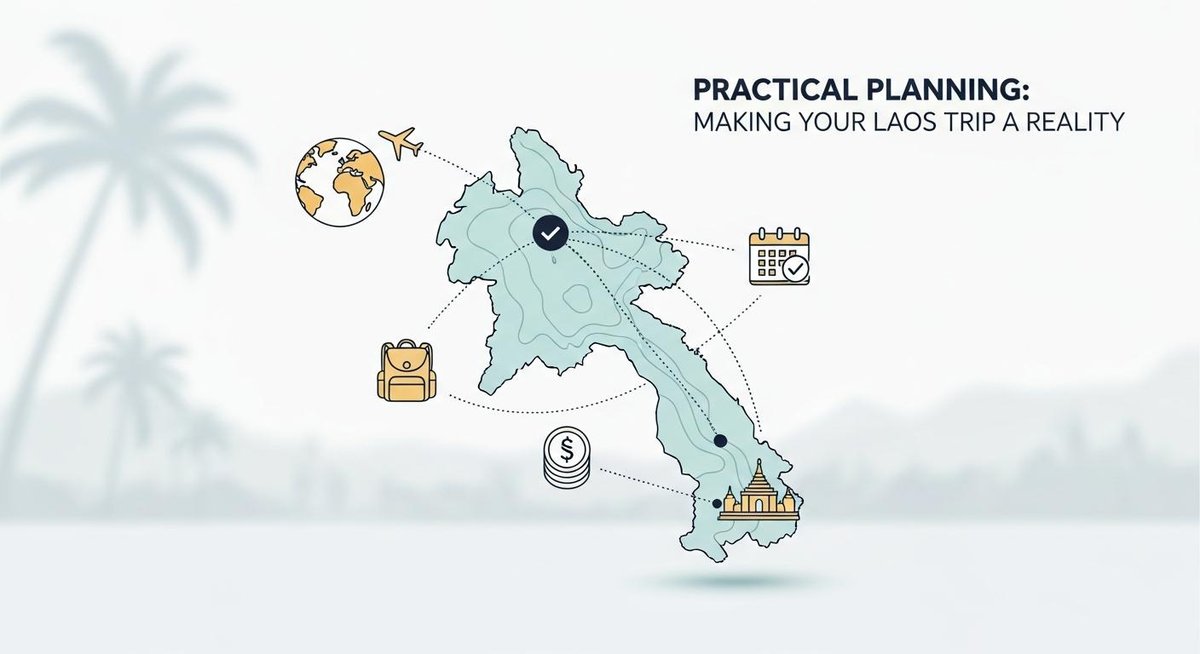 The best time to visit Laos runs from October through April during the dry season. November through February offers the most pleasant weather—warm days, cool nights, and minimal rain. March and April bring intense heat, while the green season (May-September) features afternoon rains that cool things down but can complicate rural travel.
International flights typically arrive in Vientiane (the capital) or Luang Prabang. From there, you'll navigate using a combination of buses, boats, and domestic flights. The infrastructure isn't as developed as Thailand's, but that's part of the charm. Overnight buses connect major destinations, while slow boats offer scenic alternatives for routes like Huay Xai to Luang Prabang.
A logical 10-day itinerary might include: three nights in Luang Prabang (exploring the town, visiting Kuang Si Falls, and taking a Mekong day trip), two nights in Vang Vieng (for adventure activities and scenery), two nights in Vientiane (to experience the capital and visit the Buddha Park), and three nights in Si Phan Don (for ultimate relaxation before departure)
Budget Considerations

Laos remains remarkably affordable, though prices have risen with tourism. Budget backpackers can survive on $25-30 daily, while mid-range travelers enjoy excellent comfort for $50-75 per day. Luxury options exist in major towns, particularly Luang Prabang, where boutique hotels and fine dining approach international standards.
For frequent flyers who've mastered maximizing travel rewards, Laos offers exceptional value. Your points and miles stretch further here than in more expensive Asian destinations, allowing you to upgrade experiences or extend your trip. Tools like Borderly AI help you track all those flights and miles you're accumulating on your Southeast Asian adventure, ensuring you maximize the benefits from every journey.
The affordability means you can splurge on experiences rather than just accommodations—book that Gibbon Experience, hire a private guide for temple tours, or treat yourself to a traditional Lao massage without breaking the budget. This balance of authenticity and value makes Laos ideal for travelers at any budget level, much like discovering Hawaii's diverse islands offers something for every traveler.
Answering the Call of a Forgotten Paradise
 Laos travel combines pristine natural beauty, profound cultural authenticity, genuine adventure, and soul-nourishing peace in a way few destinations still can. It's not trying to be Thailand or Vietnam—it's confidently, quietly itself, offering travelers something increasingly precious: the chance to disconnect from the frenetic pace of modern life and reconnect with what makes travel transformative.
A trip to Laos isn't just another stamp in your passport or another destination checked off a list. It's an experience that recalibrates your internal compass, reminding you that the best journeys aren't always about seeing the most famous sights or visiting the trendiest destinations. Sometimes they're about finding places that touch something deeper—places that slow you down, open your heart, and linger in your memory long after you've returned home.
For frequent flyers who've seen much of the world, Laos offers what's become rare: genuine surprise, authentic connection, and the feeling of discovering somewhere special before everyone else does. Move it from your "someday" list to your "next trip" list. The Land of a Million Elephants is calling, and trust me—you'll want to answer.